Net of depreciation definition
/What is Net of Depreciation?
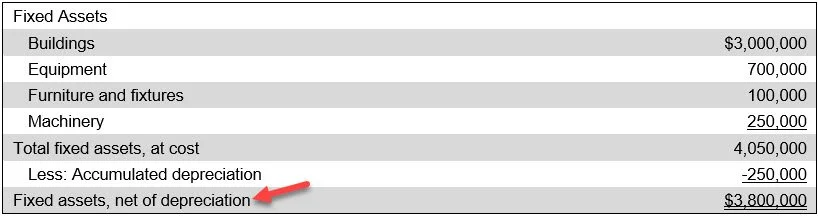
Net of depreciation refers to the reported amount of a tangible fixed asset, including all accumulated depreciation charged against it. This information may be reported separately in the balance sheet of a business, where the aggregate amount of fixed assets prior to depreciation is stated in one line item, followed by accumulated depreciation, with a third line item combining the two into a “net of depreciation” line item. An example of this presentation appears in the following exhibit, which shows the fixed assets section of a balance sheet.
FAQs
Does tax depreciation affect net book value?
Tax depreciation does not affect the net book value reported in financial statements. Net book value is based on depreciation calculated under applicable accounting standards, such as GAAP or IFRS. Tax depreciation is computed separately under tax law and affects taxable income, deferred taxes, and cash flows, not the asset’s carrying amount.